Reparations and Redress: 5 Slavery Reparation Initiatives and What They Cover
By Melisha Daniels - July 26, 2026Tweet
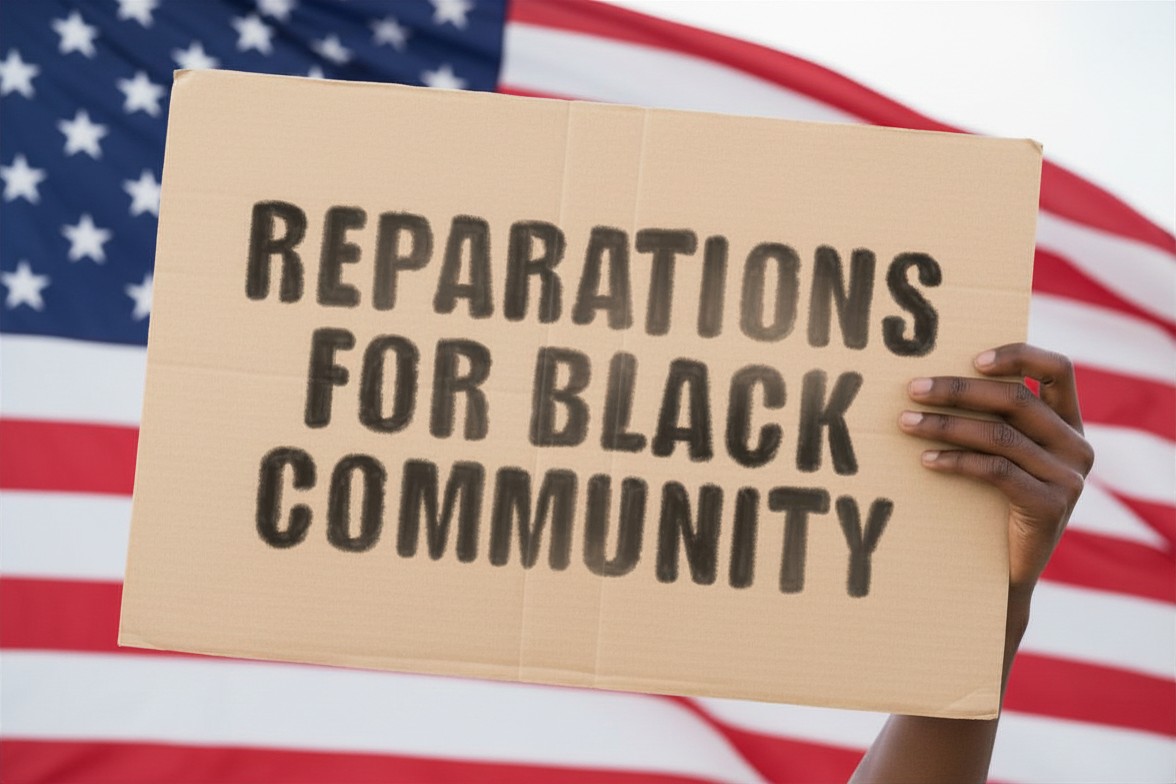
Redress is the idea that when a harm is done, the response should do more than acknowledge it—it should repair what can be repaired and compensate for what cannot. Reparations and redress should right the wrong of Slavery in every aspect of impairment.
In everyday life, redress might look like monetary payment for damages after an injury. When it comes to slavery reparations and redress should include formal apologies, financial payment, changing laws, returning resources, and making affected communities whole.
The Slave Tax
Many don’t understand how chattel slavery served as the backbone for the entire economic system in the land now known as the United States. The brutal practice was not merely about unpaid, forced labor of enslaved Africans. It was an American foundational economic system that not only built generational wealth for colonists fleeing British rule, it also served as collateral for credit and international trade.
The imposition of the Slave Tax, a levy that placed a tax on our enslaved ancestors, meant slavery functioned as an economic infrastructure that aligned private profit with public policy. A 2024 article on www.itep.org explains that the taxing of African slaves as property was the pre-civil war American government's top source of revenue. Meaning African slave labor not only built the buildings and roads of the New World, the bodies of our ancestors classified as property financed the country's political efforts.
So, since slavery and its afterlives have helped build wealth, shape neighborhoods, and structure policy outcomes for white America, what would meaningful redress look like? What compensation structure would make the math, math when it comes to an adequate reparations and redress initiative?
To answer this question JustasIam.Careers takes a look at 5 current Reparation Redress Initiatives and what they cover.
1. California State Task Force to Study and Develop Reparation Proposals for African Americans: Reparations as a Comprehensive Policy Agenda
The State-Level committee was established in 2020 by Assembly Bill 3121. California’s Reparations Task Force approaches reparations and redress as a comprehensive public policy agenda. The statewide framework connects historical harms to current disparities and then translates that analysis into recommendations.
The California Reparations Report found the economic and social losses due to housing discrimination, mass incarceration and health disparities to be valued at more than $100,000,000,000. The study associates housing discrimination as a central mechanism of intergenerational wealth loss. Mass incarceration is identified as a system that has disproportionately removed liberty, income, and political power from Black communities. And health disparities is addressed as an outcome shaped by neighborhood conditions, exposure to stress, and unequal access to care.
The recommendations treat reparations as a long-term repair strategy. And state that monetary compensation alone won’t be successful if the policies that reproduce harm remain in place. In this model, reparations is as much about re-engineering public systems as it is about correcting past balance sheets.
2. City of Evanston, IL Restorative Housing Program: Reparations as Targeted Capital
The 1st municipal reparations and redress initiative in the U.S., targets providing capital to Black residents in the form of a $25,000 housing grant. The restorative housing program funded by revenue from the city’s recreational marijuana tax, centers housing because discriminatory public policies—such as redlining and exclusionary lending—were among the most direct ways Black residents were denied wealth-building opportunities in the post-civil war era from 1919 to 1969. The grant allowed recipients to use monetary compensation for home ownership down payments & closing costs, home improvements or mortgage loan deductions.
This kind of design shows reparations and redress structured as public policy, with eligibility rules, administrative processes, and measurable aims. By focusing on restoring capital to or for Black Americans, the program approaches reparations and redress, as a remedy linked to a specific, documented pathway of harm.
3. Africatown, Alabama: Reparations as Community Repair
Africatown, located just outside Mobile, Alabama, is a community with deep historical roots. It was founded by descendants of the last known illegal shipment of enslaved Africans to the United States aboard the Clotilda in 1860. The Cotilda slave voyage was owned and financed by wealthy shipbuilder Timothy Meaher, whose descendants are to this day still reaping the benefits of generational wealth earned by criminal activity.
In 2021, the Africatown community received a $1.5 million grant from the National Trust for Historic Preservation to restore the Africatown Historic District. The grant was used to restore the community's historic buildings, including the Old Plateau School and the Africatown Community Center. The grant also funded a new museum and cultural center that tells the story of Africatown and its residents.
Africatown's approach to reparations is multi-faceted, emphasizing both cultural preservation and economic revitalization. By creating the Africatown Heritage House, and promoting local economic projects, Africatown is translating its rich history into an asset for future growth. These efforts help to ensure that the community’s legacy and contributions are recognized and celebrated, while also providing tangible benefits to its residents.
4. National African-American Reparations Plan: Reparations as a National Framework for Advocacy
The National African-American Reparations Commission (NAARC) is an organization dedicated to advocating for a national reparations policy. NAARC has proposed a comprehensive plan that includes reparative measures such as educational scholarships, healthcare improvements, and community development initiatives. Their framework is designed to address the wide-ranging impacts of slavery and its legacies, focusing on providing resources and opportunities to African Americans nationwide.
The NAARC seeks systemic changes that address the historical and ongoing effects of slavery, segregation, and discrimination. It’s 10 point plan begins with a demand for a Formal Apology and includes monetary compensation, land, education development and repair of the criminal justice system.
5. NAACP 2019 Reparations Resolution
The NAACPs 2019 Reparations Resolution helped push reparations further into national advocacy by calling for a formal study, public policy action, and accountability for slavery and its ongoing harms. It frames redress as more than an apology: the resolution points toward compensation, structural repair, and public recognition of harm—alongside clear expectations for institutions and public leaders.
The resolution focuses on Black communities seeking repair and calls to the front lawmakers and government agencies in the position to make decisions regarding reparations legislation and the funding of redress related compensation. From education and finance to housing and employment the resolution serves as a policy benchmark when advocating for legislation to acknowledge, compensate and remedy the damage caused by the practice of slavery.
The throughline is that reparations and redress is best understood as a mix of material compensation, policy change, and public accountability. The hardest debates are not about whether harm occurred, but about the practical forms of redress that can meaningfully alter present conditions while repairing and replacing the systems that produced them.
These initiatives collectively illustrate the diverse ways in which reparations and redress can be approached. Whether through local programs, state task forces, or national advocacy, each effort contributes to a broader understanding of what meaningful repair can and should look like. With the ultimate goal of addressing historical harms and fostering equity and justice for future generations.